
Ideas from De Otro Planeta · Opinion and analysis
The glasses that could give augmented and virtual reality a second wind
Meta VR Glasses, artificial intelligence and a fresh opportunity to build experiences that people actually want to put on.
The future still weighs on you
There is a particular moment in a virtual reality experience when someone puts on the headset, looks around and smiles. An idea that seemed hard to explain suddenly makes sense without a single slide.
Then comes the rest. Adjusting the strap. Finding a comfortable fit. Learning what each button does. Wondering where your hands went. Each obstacle is small, but together they can make a fascinating experience feel unnecessarily complicated.
At De Otro Planeta, we see one of the industry’s biggest opportunities there. We have had the imagination to build other worlds for some time. The experience of entering them still has room to improve.
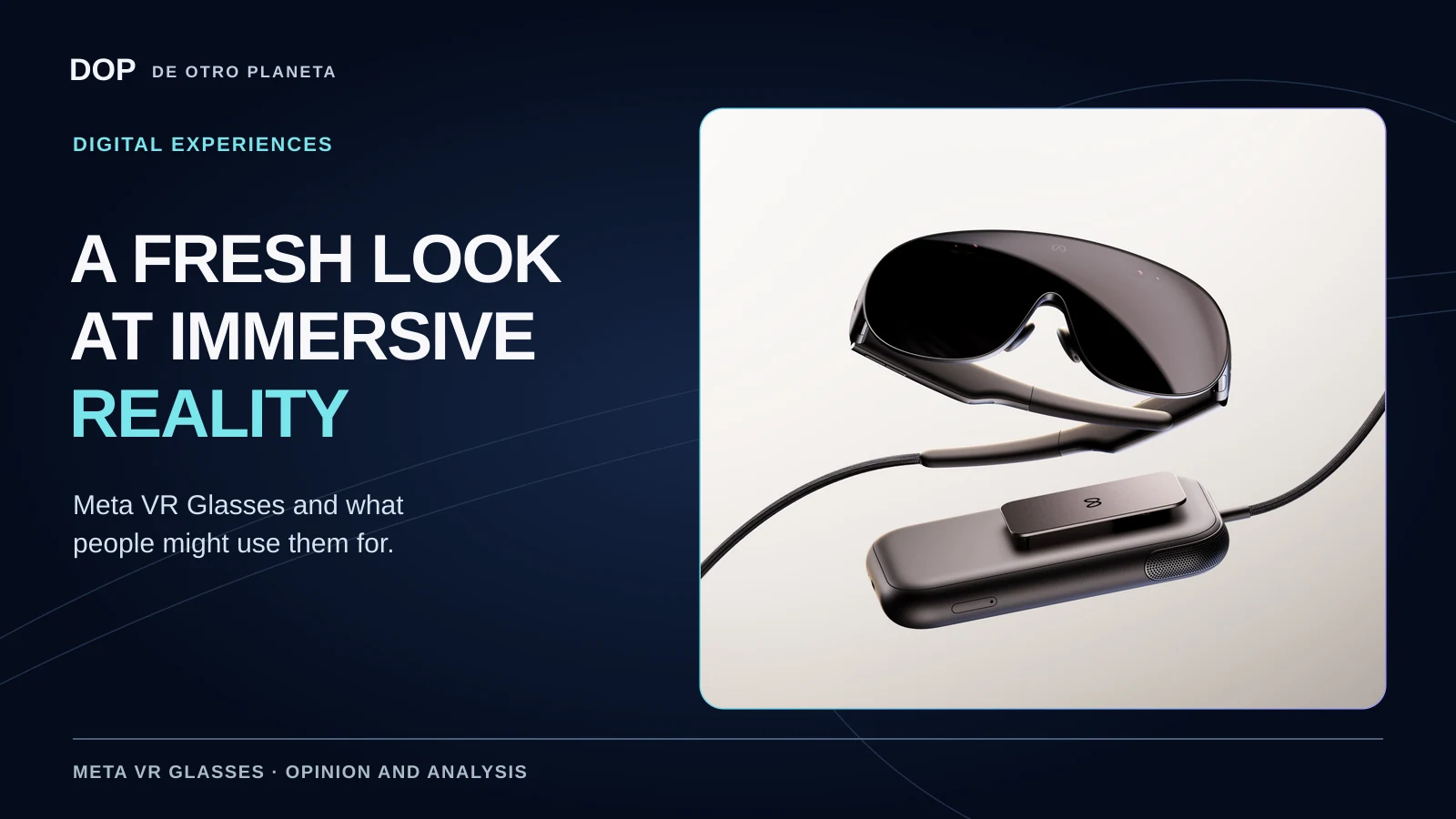
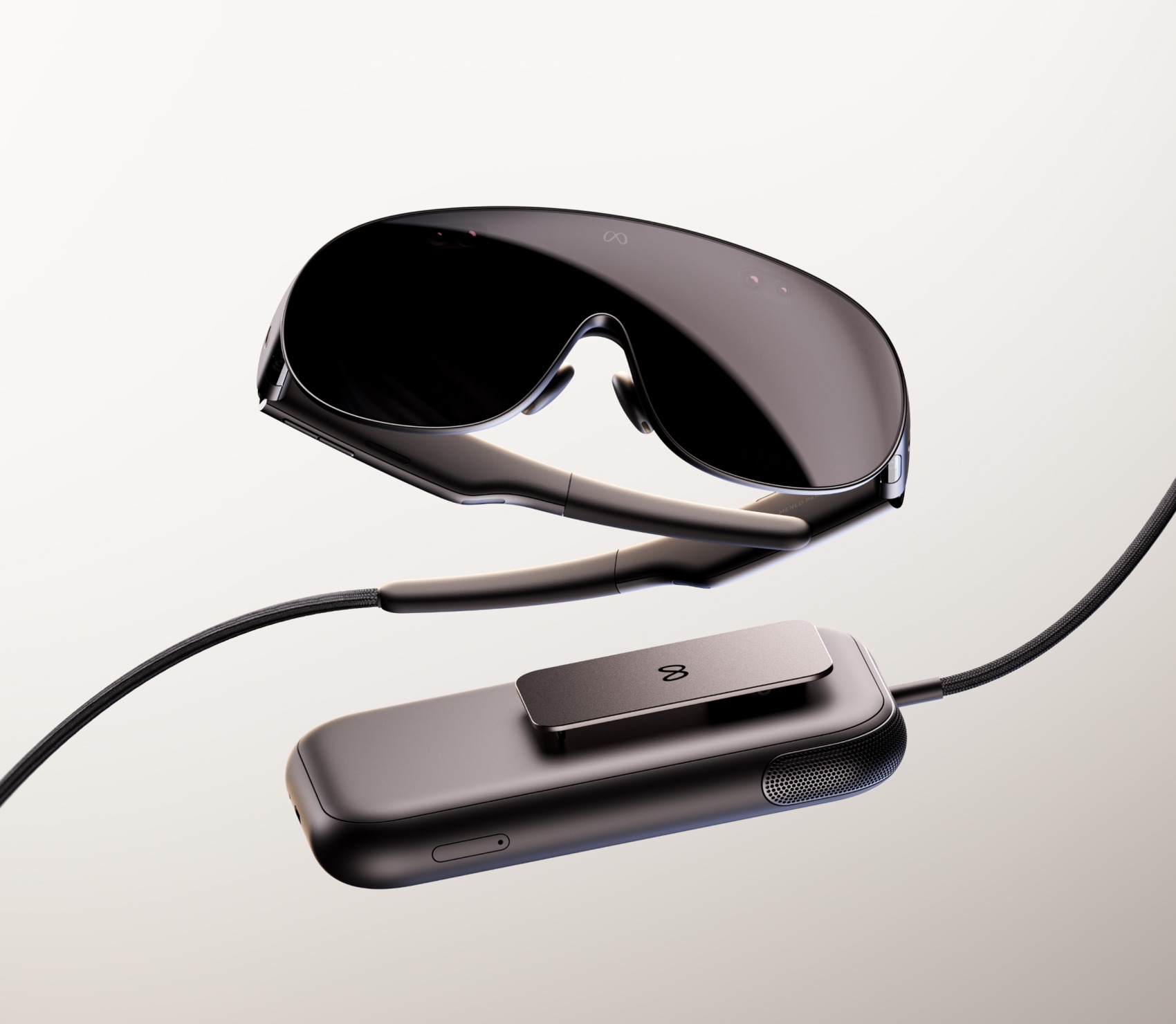
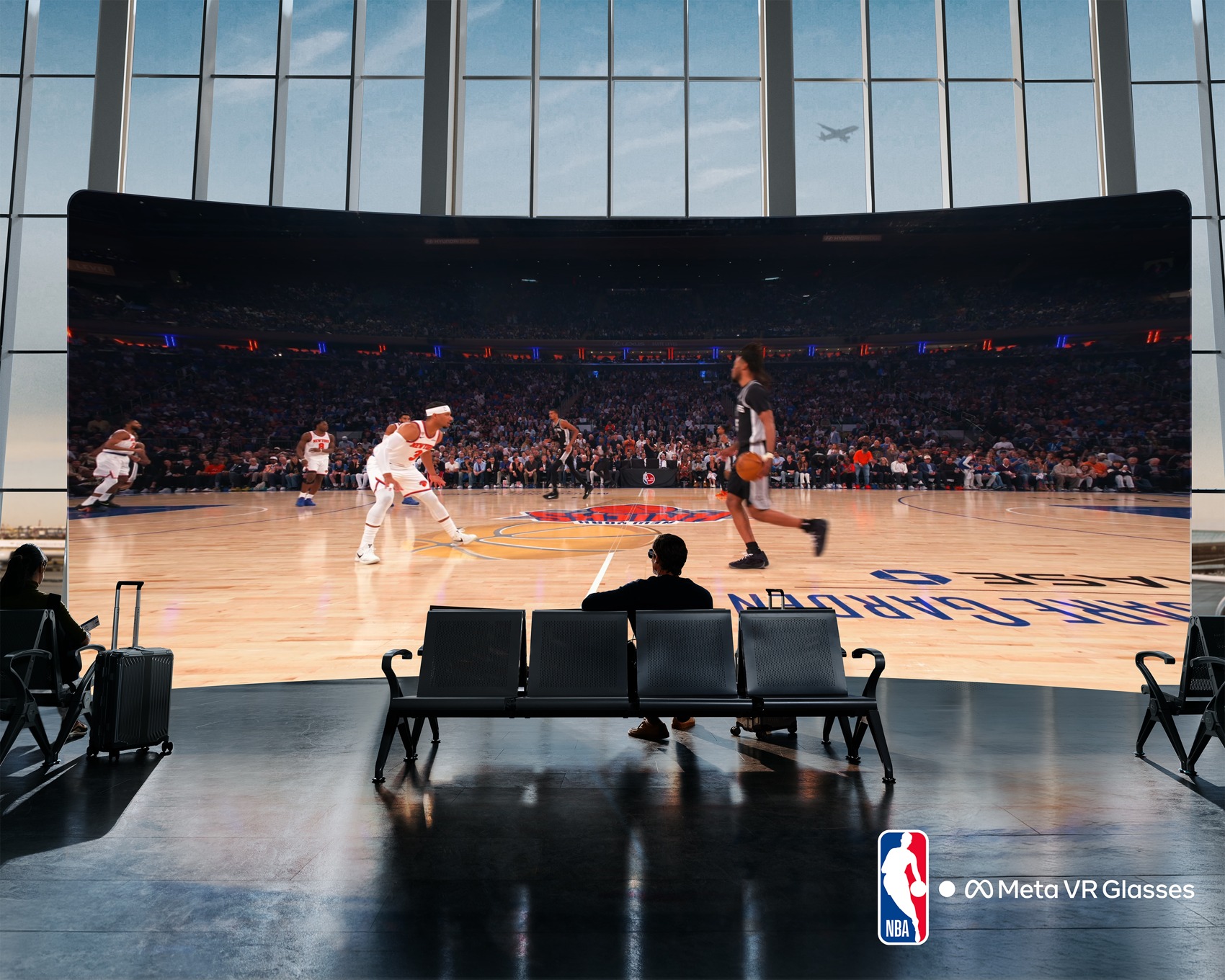
That is what caught our attention about Meta VR Glasses. Meta introduced them on September 23, 2026, and announced a spring 2027 release at US$1,299.99. The design moves part of the device into your pocket, leaving about 100 grams of glasses on your face. Meta’s official announcement.
We have yet to try them. What excites us is the question they raise. What could we build if stepping into an immersive experience were considerably easier?
First, we had to get used to wearing technology on our faces
Whether a device catches on also depends on how it looks in the mirror. We can admire what it does and still wonder whether we would ever wear it.
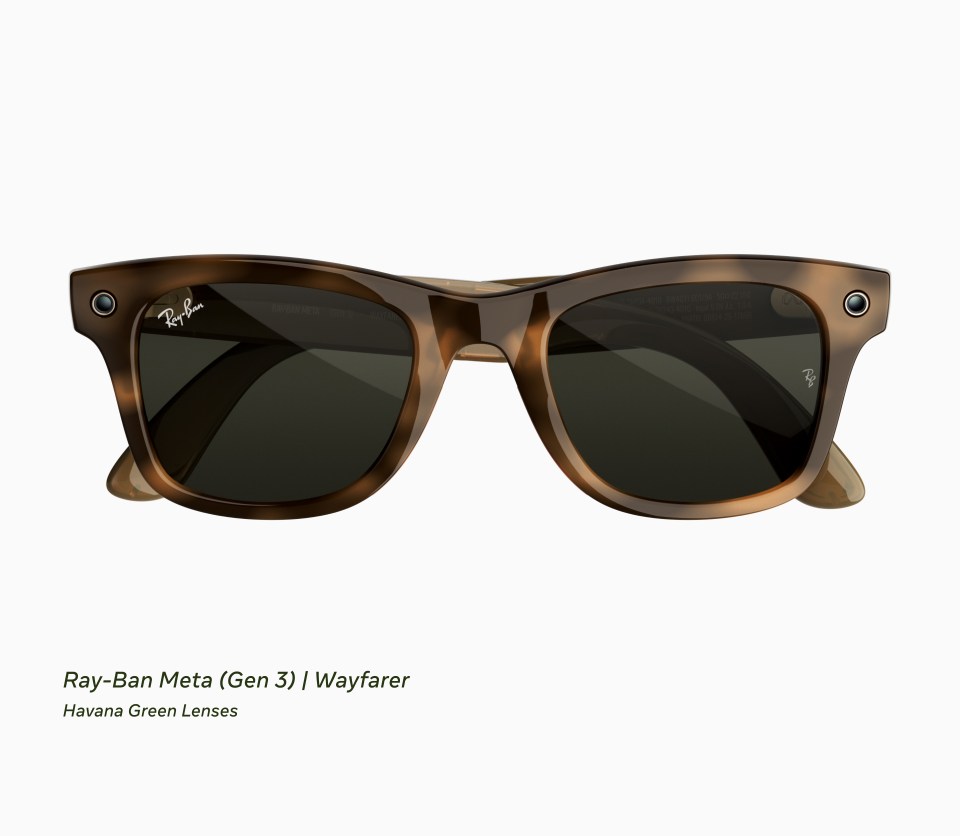
Smart glasses have opened up a different conversation. By working with eyewear brands, Meta is bringing technology into objects we already know how to choose, wear and fit into our lives. At Connect 2026, the company expanded its range with Ray-Ban Meta Gen 3, which includes a camera, audio and AI, and Ray-Ban Meta Audio, a new audio-only line. Meta’s eyewear lineup.
For us, the cultural significance is familiarity. A useful pair of glasses can become someone’s introduction to a different way of using technology. That familiarity might make the next step feel less strange, even if everyone makes their own choice about taking it.
The products serve different purposes. Oakley Meta Vanguard brings camera, audio and AI features to sport without a display. Meta Ray-Ban Display has a screen for quick checks and a wristband controller. The new VR Glasses offer a different kind of immersion. Oakley Meta Vanguard, Meta Ray-Ban Display.
There is also Orion, the transparent-lens augmented reality prototype presented in 2024. Orion never went on sale as a consumer product. The newly announced VR Glasses belong to the virtual and mixed reality family and use cameras to show the wearer’s surroundings. Our view of the opportunity for augmented and virtual reality draws on the whole landscape, with these distinctions in mind. Orion, Meta’s device comparison.
One hundred grams can change a conversation
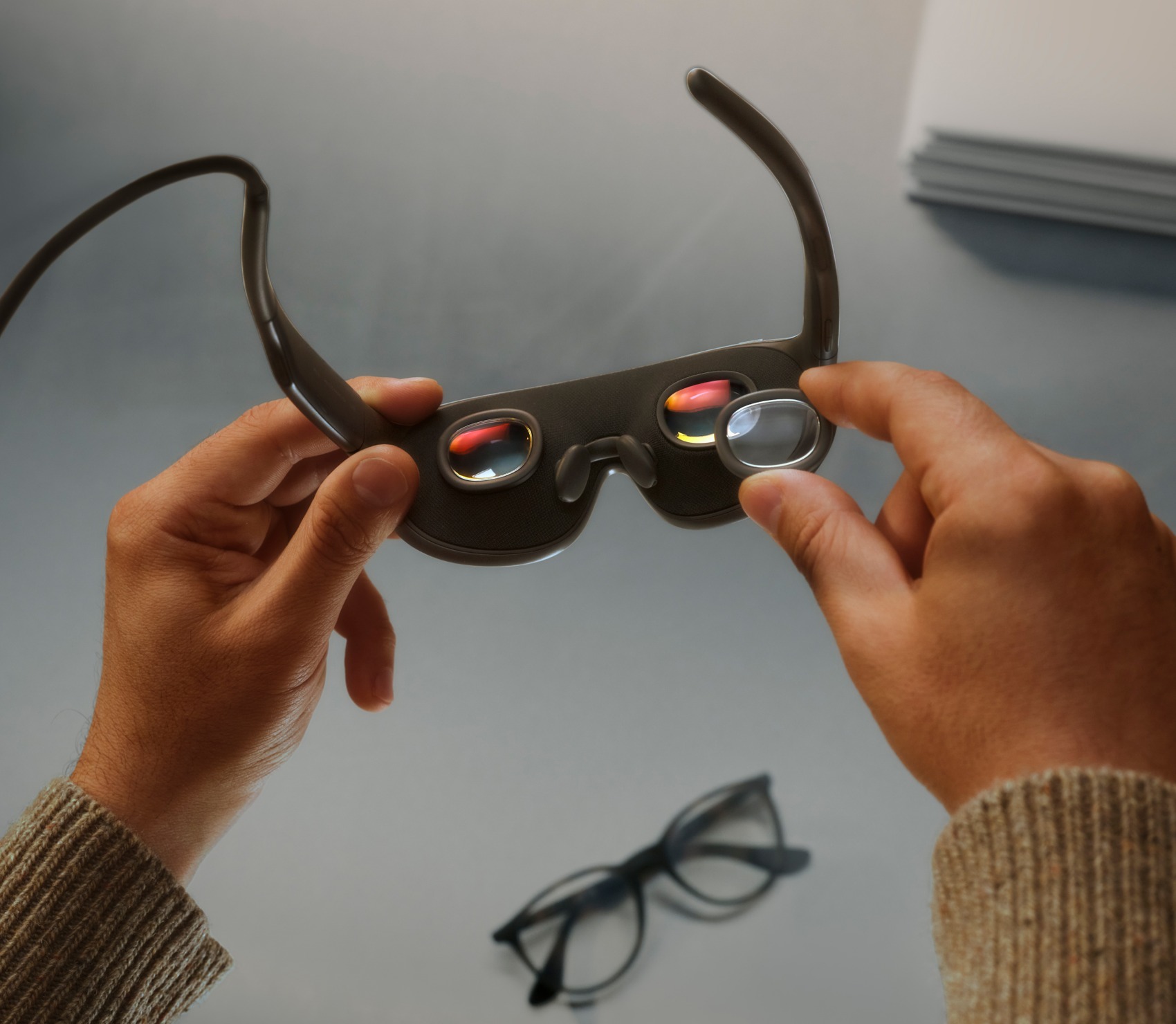
Weight makes more sense when you wear it than when you read a number. At an event it may affect whether someone wants to take part. At a presentation it may determine how long they stay. In a creative experience it can affect how easily they forget the device and focus on what is happening.
Meta’s figure needs context. The roughly 100 grams refers to the glasses. Processing, battery and storage sit in an external module connected by an optical cable. You still carry both pieces, but less of the weight rests on your face. Meta advertises up to three hours of media playback. Meta’s design and battery life announcement.
Quest uses a standalone headset with computing built in. The VR Glasses divide the system between the frames and the module. Compare the form factors.
That redistributes the load and leaves important questions. We want to know how the whole system feels after a session, how easily the module fits in a pocket and what happens to the cable when someone moves. The announcement does not break down the system’s total weight.
A scale only measures one aspect of comfort. Fit, pressure points, individual vision and the content itself all matter. A promising piece of engineering still has to pass a human test. Do people want to keep wearing it?
Apple’s ambition still matters
It would be easy to cast this as a race with a winner and a loser. We are more interested in what each approach contributes.
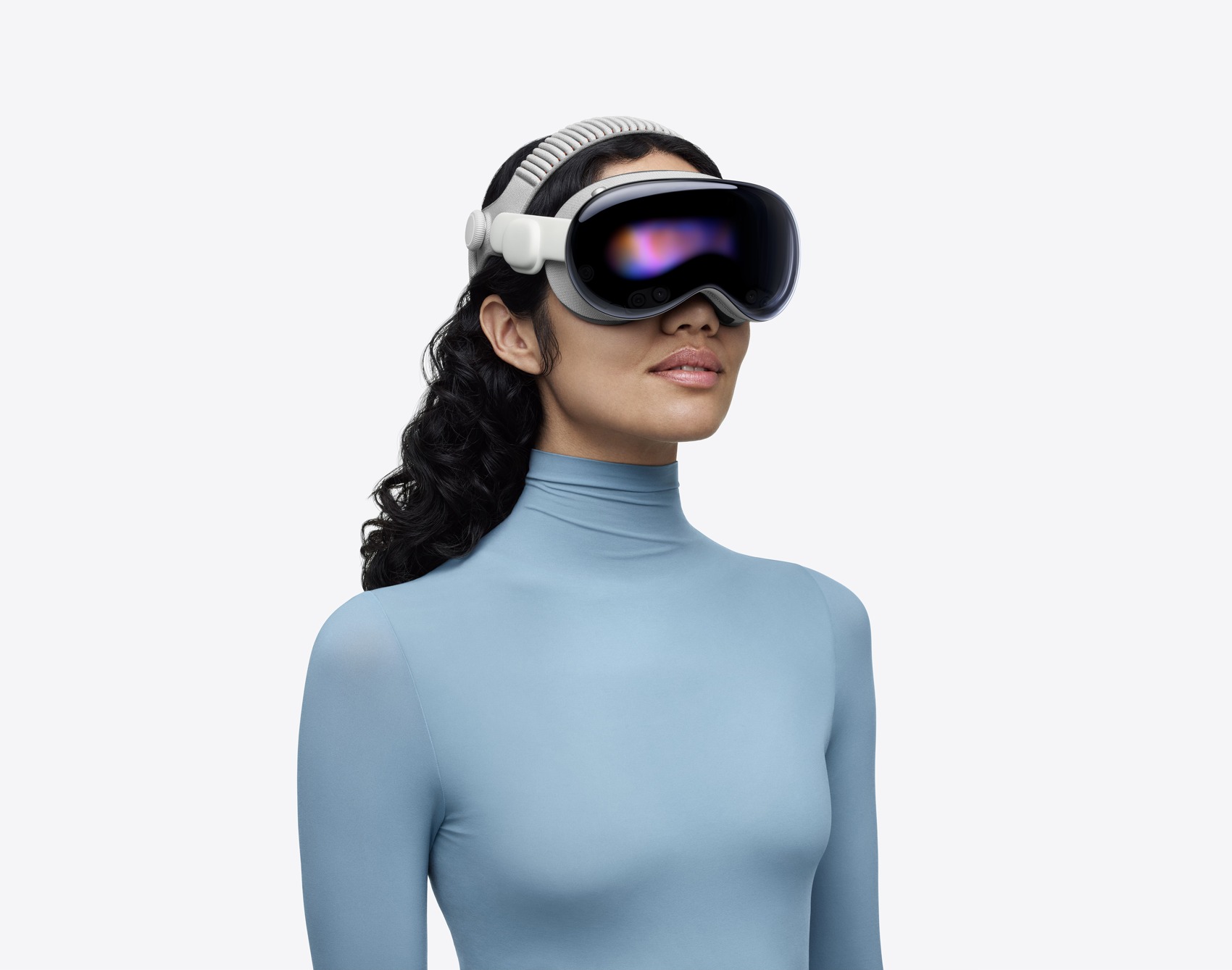
Apple Vision Pro deserves a place in the conversation for its emphasis on image quality, spatial interaction and an integrated experience. The M5 version combines micro-OLED displays with eye, hand and voice controls. Its announced US starting price was US$3,499. Apple’s announcement, official technical specifications.
Price can be a barrier to trying the technology or deploying several devices at an event. Form matters too. Apple lists 750–800 grams for the device with its Light Seal and band, plus an external battery weighing 353 grams. Those figures describe different components from the roughly 100 grams Meta quotes for its glasses. Apple’s weight specifications.
In our view, ambitious engineering can coexist with design decisions that make adoption harder in some settings. The challenge is to improve the experience while making the device easier to fit into daily life.
For experience designers, the practical question is how to balance quality, comfort, cost and ease of use. A new approach gives us another option worth considering.
Look, gesture, speak
Another barrier appears quickly in demonstrations. Before you can explain the experience, you have to explain the controller.
VR Glasses use eyes and hands as the primary means of interaction. Meta’s documentation describes looking to point and pinching to select. The glasses also support Touch Plus controllers, sold separately. Meta’s developer guide.
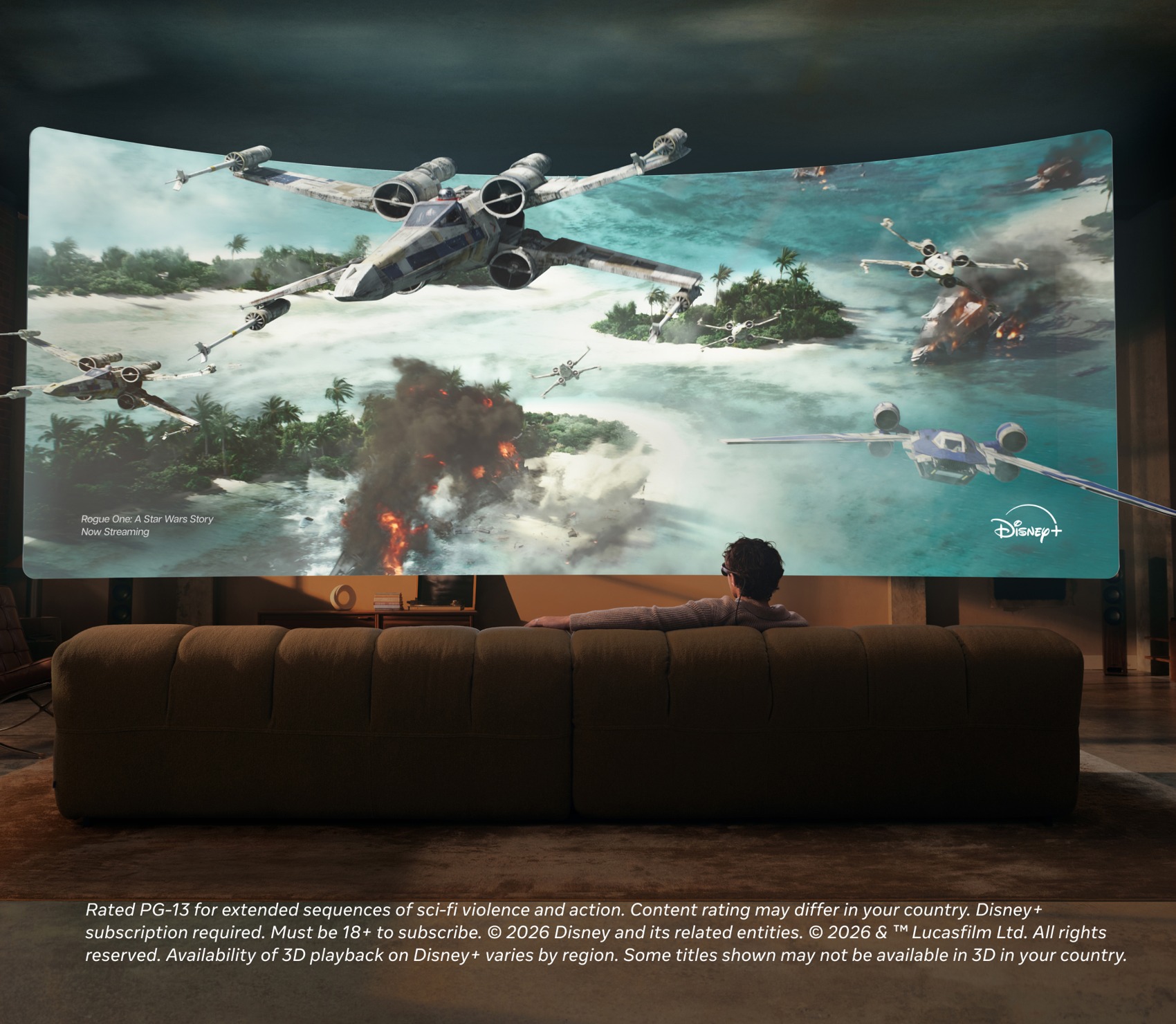
Entertainment features include 3D films, immersive sports and video games. Meta’s product announcement.
Meta also announced voice interaction through Meta AI. Examples include arranging windows and playing content, alongside a workspace with multiple screens and input on a surface. Connect 2026 recap.
We see value in reducing the instructions between someone and what they want to do. If they can look at an object, select it and ask a natural question about it, we have an appealing starting point for a story.
Then comes the design work. How does the visitor know a gesture worked? What if they cannot make it? How do they go back? A simple interface needs clear feedback and accessible alternatives. The device can detect an action. It is our job as designers to give that action meaning.
 AI concept illustration
AI could give people a reason to stay
Much of the excitement around AI has focused on talking to it. At De Otro Planeta, we see an opportunity to bring those conversations into experiences that people can also explore visually.
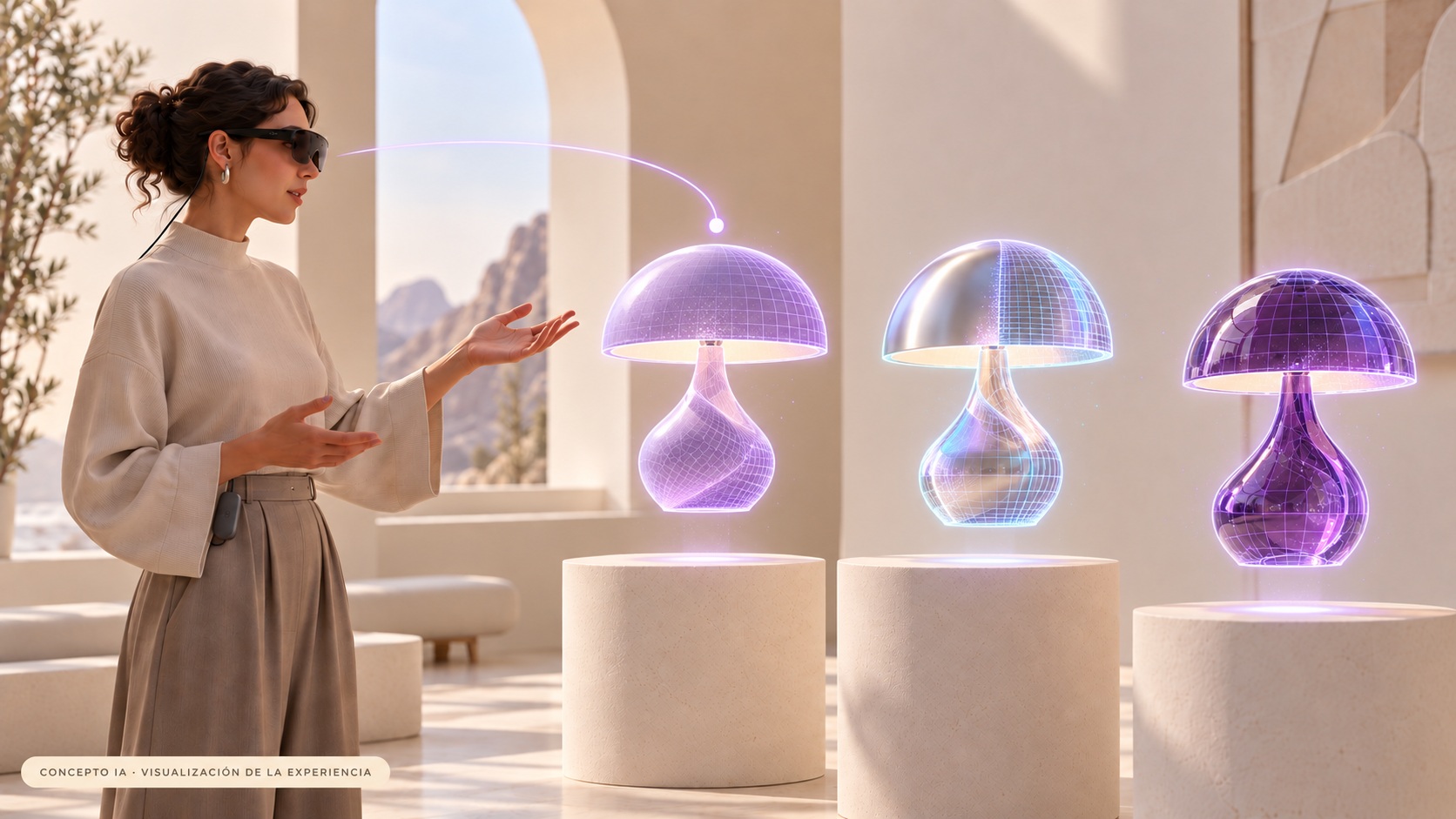
Imagine a product presentation where you can ask questions while examining the details. A tour that adjusts its explanation to your interests. An object that changes material or color when you ask, within a set of real, preconfigured options.
For a brand, this could turn a standard demonstration into a conversation with each visitor. For the audience, it could mean more control over what they see and how far they explore.
These scenes are creative concepts. They would require someone to build the content, integrate AI, define what it can do and test what the platform actually supports. Meta has not demonstrated all these uses, and we would not expect voice commands alone to generate an entire experience.
We see AI as a way to expand the choices a visitor can make. Designers still have to decide what is worth showing, look after the story and keep the interaction from turning into an endless conversation with a menu.
 AI concept illustration
What we want to explore at De Otro Planeta
We intend to try these glasses in 2027, once we can get them, and assess their use in product and event experiences. We want to find out how much more personal an interaction can become with voice and AI.
We have three scenes in mind.
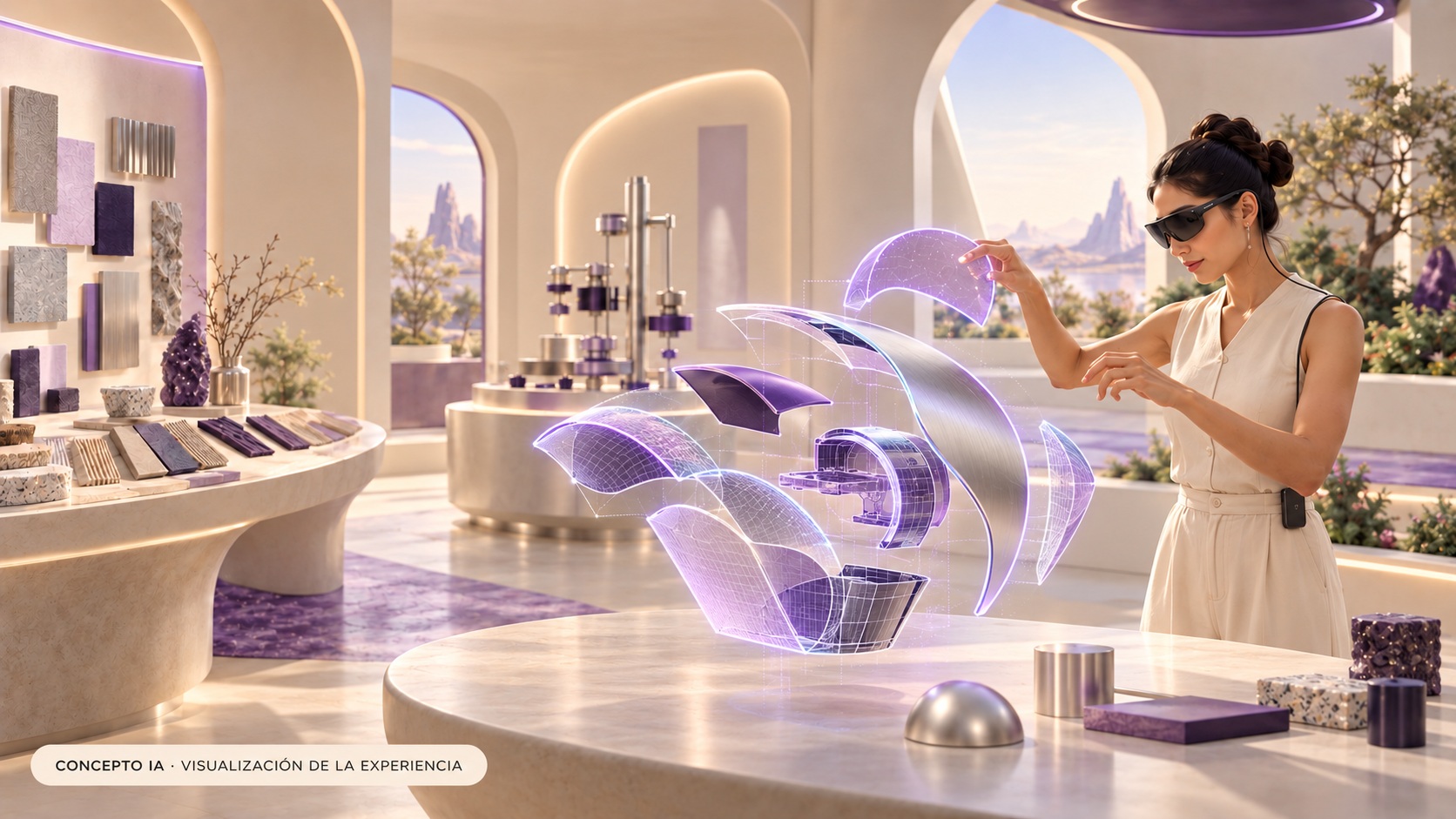
The first is a product launch. A visitor could explore a design at scale, move closer to inspect details and choose among prepared configurations. They could ask for an explanation or an option without searching a long list. The challenge would be to turn their words into specific, verifiable actions that are easy to undo.
The second is a brand story with different paths. One visitor wants to learn where a material comes from. Another cares about how the product is made. Someone else wants a short explanation. The experience could offer all three levels of detail and still tell a coherent story.
The third is a presentation that helps someone picture a space or product before it exists. Seeing its proportions, comparing alternatives and talking them through could make a decision easier. The representation would have to reflect what is on offer and make its limitations clear.
Each idea needs content, development and production. It also needs an answer to a much less futuristic question. What does the visitor gain by putting on the glasses? Even the lightest device in the world cannot fix a weak answer.
The tools are taking shape. Design comes next
The announcement has another aspect that matters to us as creators: the tools. Meta has released its v207 SDKs and documentation for developers preparing experiences. VR Glasses share an operating system, store and development tools with Quest, though interaction must be adapted to their form. Meta’s developer resources.
This makes it possible to start work ahead of launch using simulators and documented test paths. We still need to put the finished product in front of real people. Getting started with VR Glasses.
There are design constraints to consider. The announced horizontal field of view is about 70 degrees on VR Glasses and 110 degrees on Quest 3. That difference affects where we place an interface and how we direct attention. Meta’s official comparison.
For an event, we also have to solve what rarely makes the launch video. Adjusting the fit between users, cleaning, charging, connectivity, crowd flow, staff support and privacy are all part of the experience. If a system listens to visitors or processes their information, it should explain what it does and seek the appropriate permission.
That preparation interests us as much as an impressive image. A well-produced experience begins before the visitor puts on the glasses and continues looking after them when they take them off.
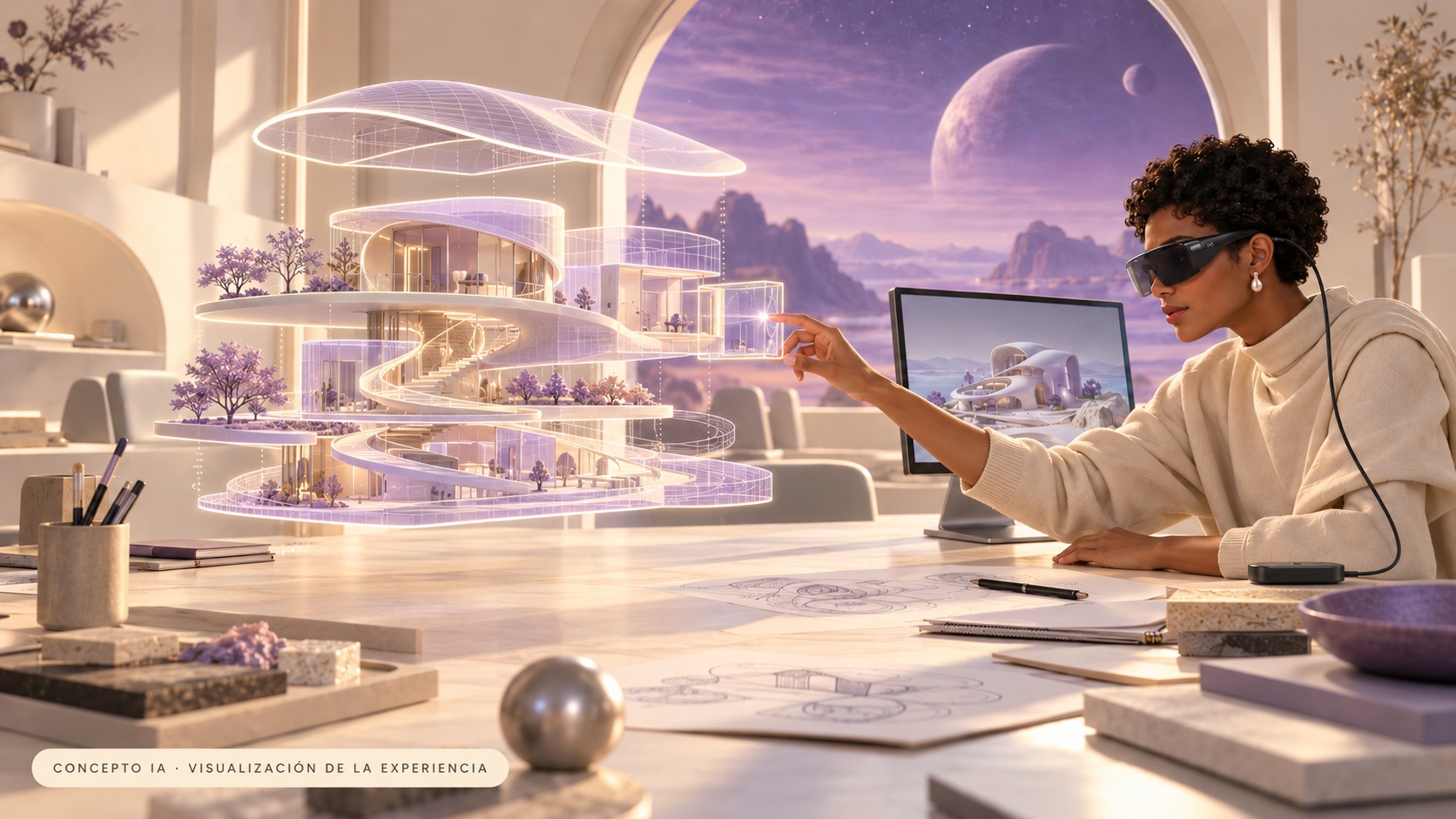 AI concept illustration
Looking ahead to 2027 with questions to test
We see Meta VR Glasses as a sign that the industry is still looking for ways to make immersive experiences easier to wear and understand.
Questions remain about the finished experience, availability by market and the actual cost of using the devices on a project. Their arrival is planned for 2027. As of this article’s publication, these are plans and possibilities, ahead of widespread availability or any results measured by our team.
At De Otro Planeta we want to try them with the mix of curiosity and judgment that new technology calls for. We want to see what works, identify what still gets in the way and find stories worth telling in this format.
Perhaps the next chapter of augmented and virtual reality starts with something as simple as reducing the weight, simplifying a gesture and giving someone a good reason to step inside.
The rest is ours to create.