
Meta and Google advertising
How to tell which Meta ad drove a WhatsApp sale
Before switching off a campaign, ask yourself one more question: which of my campaigns brought in the sale? At De Otro Planeta, we use the first WhatsApp message to trace a sale back to the ad. We can also use the WhatsApp API and Meta conversion events, although that takes a little more setup.
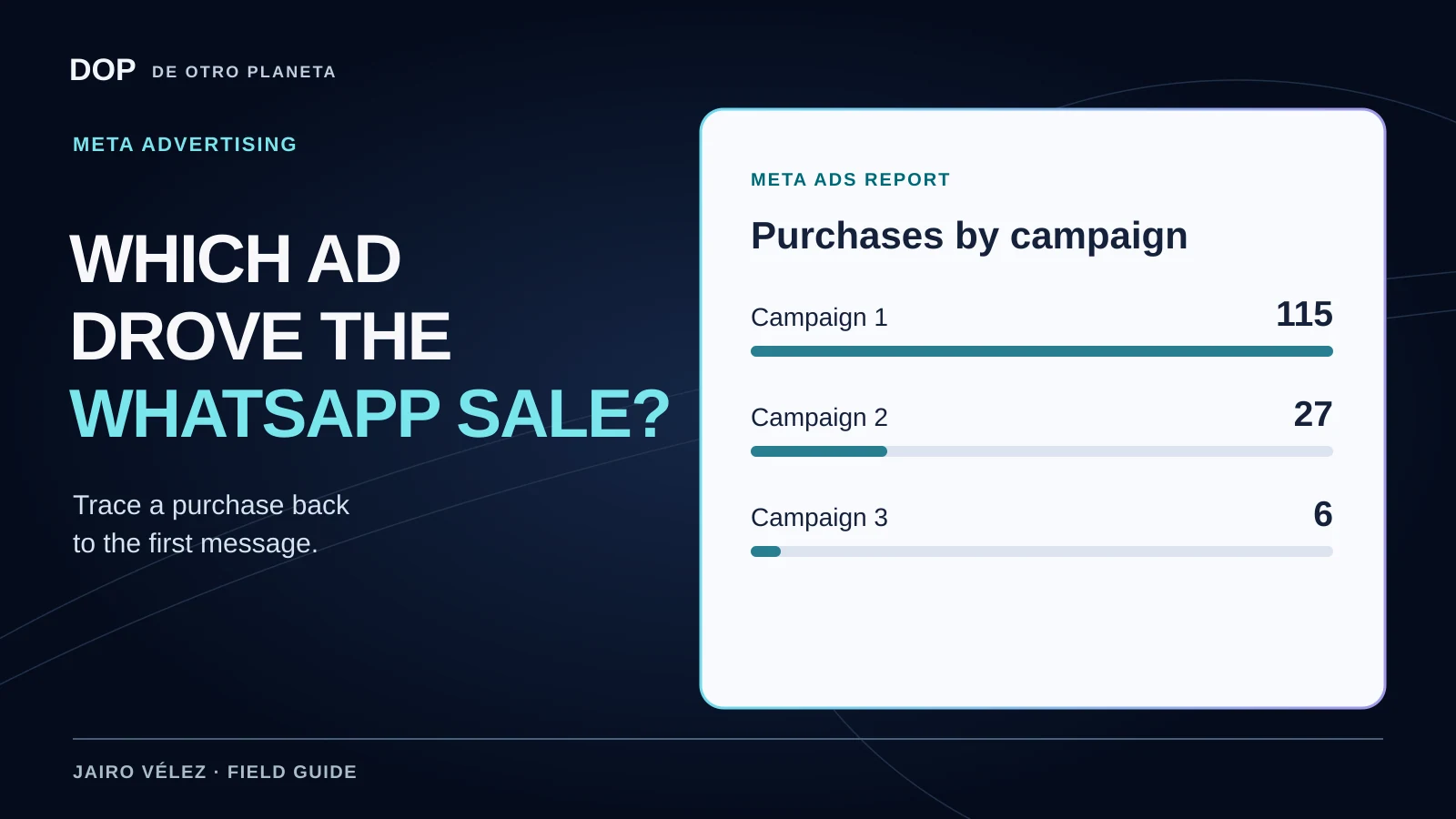
The clue in the customer’s first message
Picture two campaigns that send customers to the same WhatsApp number. Both show the same video of the same sofa. If everyone starts with “Hi, I’d like more information,” how can your sales rep tell which campaign brought in the order they just collected payment for?
Here’s what we do. When we set up each ad, we change the phrase the customer can select and send when WhatsApp opens. The business can keep its automatic greeting. The clue our sales rep needs to recognize is the first message they receive from the customer.
On mobile, swipe across the table to see all columns.
| Source | Video | Message the customer can send |
|---|---|---|
| Campaign A | Modular sofa | Hi, could you send me the measurements of the modular sofa? |
| Campaign B | Same video | Hi, I’d like to know the dimensions of the modular sofa. |
Both phrases ask for the same thing. I can identify the campaign without prompting one customer to ask about price and another about a discount. To compare ads within one campaign, I give each ad its own phrase. If I offer several opening questions, I keep a list of every version and the ad it belongs to.
How to follow the source through to payment
- Before turning on the ads, I record the campaign, ad set, ad name, and opening phrase in a spreadsheet. I open the preview and check the text that actually arrives in the chat.
- When the message comes in, the sales rep saves its source with the conversation. If someone deletes the phrase and just writes “Hi,” we record “unknown source” unless we have another reference.
- When payment comes in, the rep adds the order number, date, and confirmed amount to the same record. Even if the customer took several days to decide, I can still trace the sale to the ad. We count each order once.
At the end of the week, I group paid orders by ad and count how many still have an unknown source. That helps the team make decisions. Getting a purchase into Ads Manager requires one more step: sharing the event with Meta.
Would you pause the campaign with the more expensive chats?
Imagine we spend the same amount on both sofa campaigns, sell the same product, and give the conversations the same amount of time to close. The figures in this example are hypothetical and are in Colombian pesos.
On mobile, swipe across the table to see all columns.
| Metric | Campaign A | Campaign B |
|---|---|---|
| Ad spend | COP 300,000 | COP 300,000 |
| Conversations | 100 | 40 |
| Cost per conversation | COP 3,000 | COP 7,500 |
| Paid orders | 2 | 5 |
| Cost per purchase | COP 150,000 | COP 60,000 |
If I look only at WhatsApp, A seems to win. But B acquired a buyer for COP 60,000, even though starting a chat cost two and a half times as much. I would keep B running while I looked into what happened to A’s 100 conversations. To decide what I could spend on the next sale, I’d compare the cost per purchase with the margin on the sofa.
From campaign to video in three screenshots
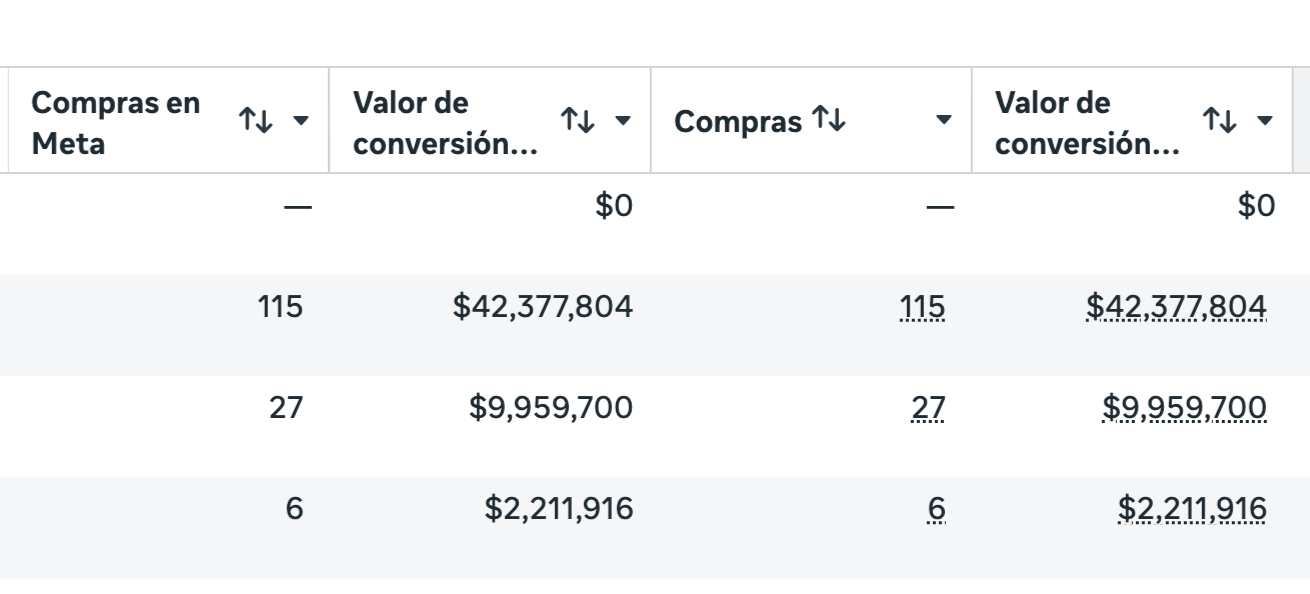
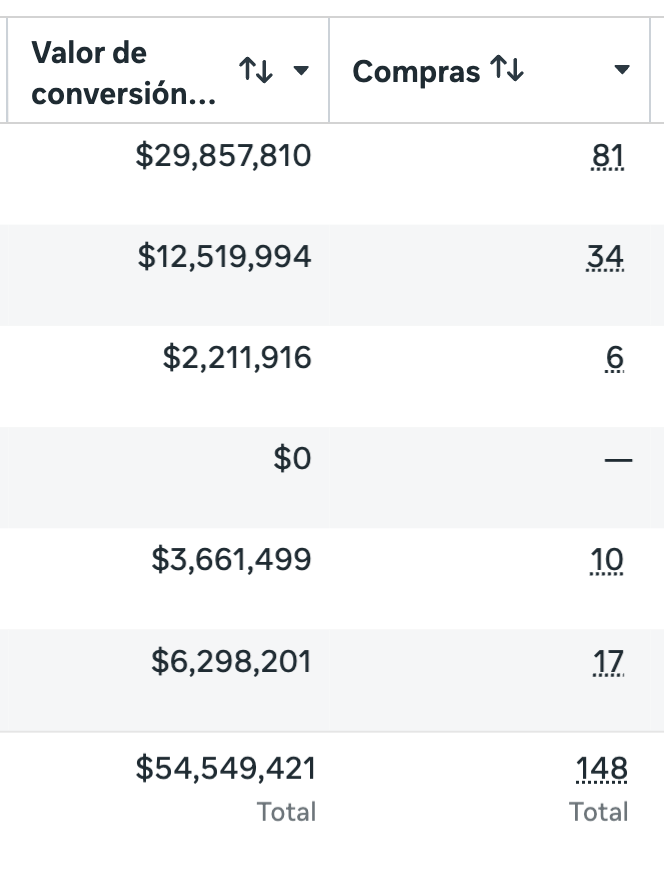
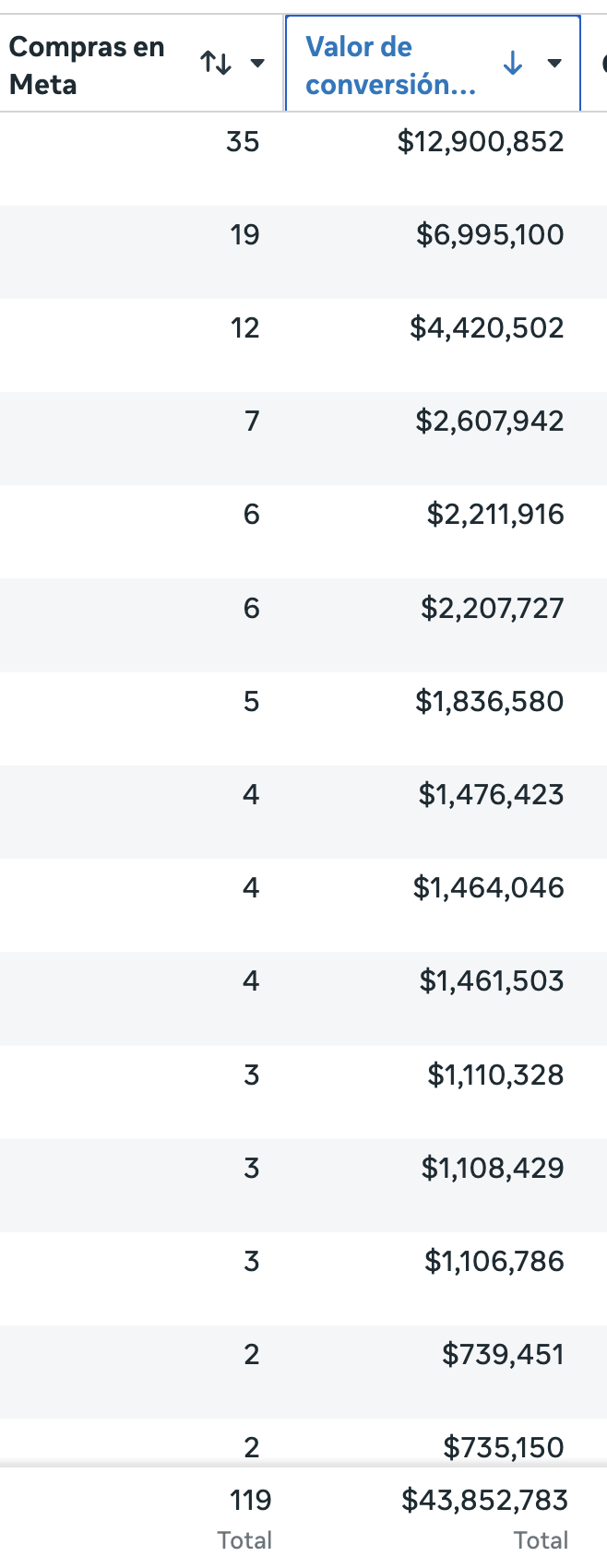
In Ads Manager I select a date range, open Columns → Customize columns, and add purchases, purchase conversion value, and amount spent. I keep the same filters as I move between levels. Here are the three views I use at the agency.
The original report is in Spanish. Compras means purchases, Compras en Meta means purchases on Meta, and Valor de conversión means conversion value.
1. Campaigns · Where do most purchases come from?
2. Ad sets · How are those purchases distributed?
3. Ads · Which creative deserves another test?
How we use the WhatsApp API and Meta’s Conversions API
We used to match these records by hand. The sales rep recognized the ad’s opening phrase on WhatsApp and recorded the campaign when the customer paid. To produce the report above, we connected WhatsApp to our customer messaging platform and configured it to send purchase events to Meta.
The WhatsApp Business API helps us identify the source of the chat. When someone opens WhatsApp from an ad and sends their first message, the messaging platform can receive the click reference and save it with the conversation. When that reference is available, we can keep the connection to the ad even if the customer edits the opening phrase.
Meta’s Conversions API (CAPI) reports the outcome. Once the rep confirms the payment and marks the sale in the platform, the integration sends Meta a purchase event with its value, currency, and click reference. Meta uses that information to attribute the purchase. Those attributed purchases and their value are what you see at each level of the report.
Most of the extra work comes at setup. We connect the WhatsApp account, choose which team action confirms the customer paid, and use an order to verify that the event arrives once with the correct amount.
If you use the WhatsApp Business app, you can also mark an order as paid. If sharing order events with Meta is enabled on your account, you can use that option and compare your attributed purchases with the payments you confirmed.
What I check before moving budget
I pick a sale from this week and ask the sales rep to show me the ad it came from. If we can trace the order to the first message, we have a way to start measuring. When we also send events to Meta, I check from the other end by opening the ad and looking at the purchases attributed to it.
With both records I can make a better decision. A campaign that keeps the inbox busy deserves a review of what happens in those conversations. And a campaign that brings in fewer chats might deserve more budget if it brings in buyers at a cost the business can sustain.
— Jairo Vélez
Further reading
Do you know where your last sale came from?
Tell us how your team records orders. We can look together at what information is missing between the ad and the payment.
Talk to us about your advertising and sales ↗