
Meta and Google advertising
CTR and CPM in Meta Ads: how to read them with Miga Café
CPM is the average cost of showing an ad 1,000 times. CTR expresses clicks as a percentage of impressions. In Meta Ads, check which CTR column you are reading. Link CTR counts link clicks, while CTR (all) also includes other interactions. To find out how many sales you made, you need purchase data.
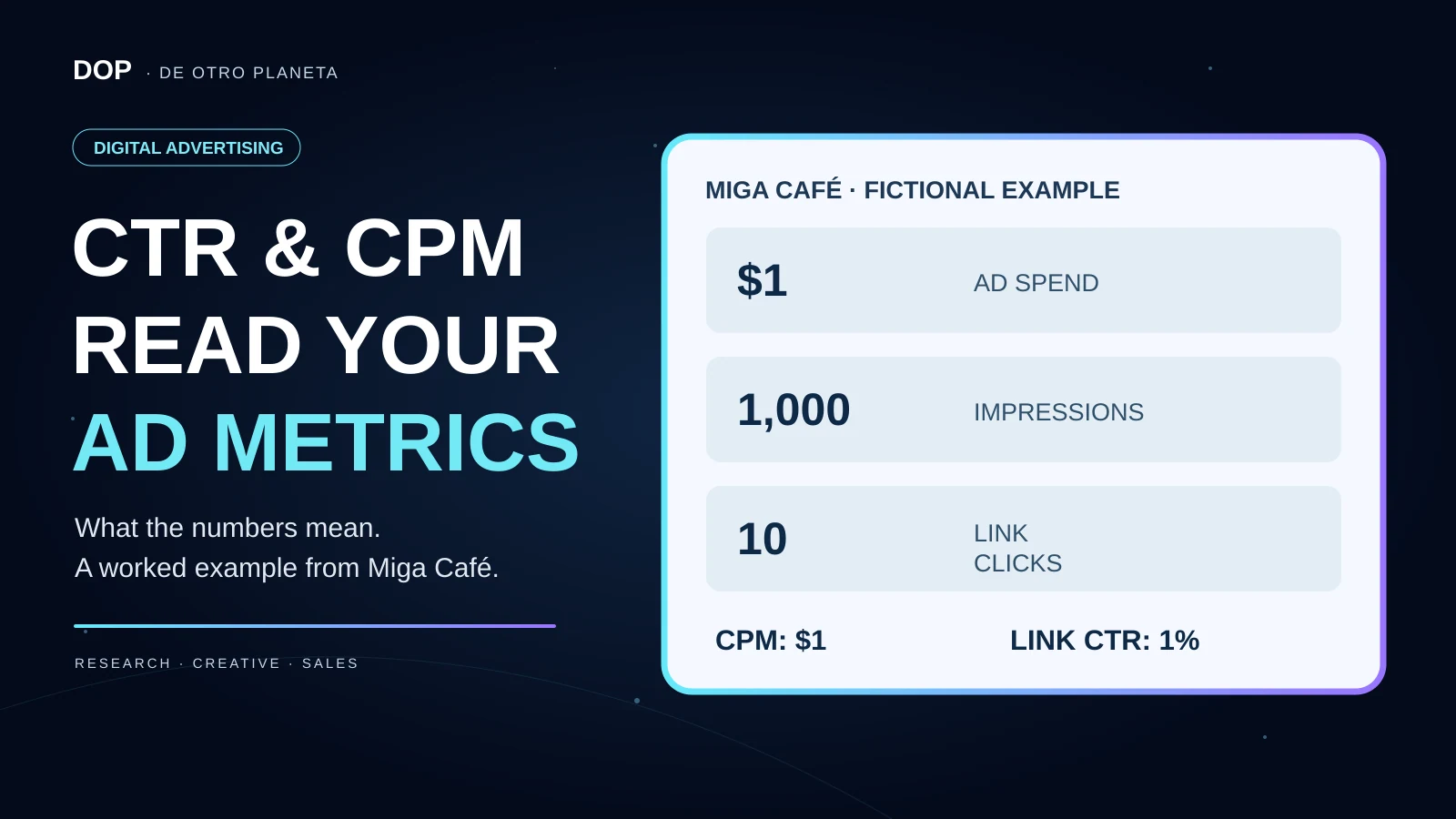
Watch the Miga Café example
The original video is in Spanish. In this example we calculate CPM from impressions, which can include repeated appearances to the same person. Our own campaign figures are specific to their context, and a click does not establish a store visit.
Watch the video on YouTube ↗On a phone, scroll tables horizontally to see every column.
Let's use Miga Café, the fictional business in our video. These numbers illustrate the calculations. They do not come from an actual Miga campaign.
CTR and CPM at a glance
| Metric | Question it answers | Formula | Unit | What it does not establish |
|---|---|---|---|---|
| CPM | How much did it cost to show the ad 1,000 times? | Spend ÷ impressions × 1,000 | Account currency per 1,000 impressions | That 1,000 different people saw the ad or made a purchase |
| Link CTR | How many link clicks did the ad receive relative to impressions? | Link clicks ÷ impressions × 100 | Percentage | Completed website visits, store visits or sales |
| CTR (all) | How many clicks of any kind did the ad receive relative to impressions? | Clicks (all) ÷ impressions × 100 | Percentage | That every click opened the ad's destination |
Use data from the same dates and reporting level: ad, ad set or campaign. Without impressions you cannot calculate these rates. Leave a missing value blank rather than filling it with zero.
What CPM means in Meta Ads
CPM stands for cost per thousand impressions. Divide the amount spent by the number of impressions, then multiply by 1,000.
CPM = ad spend ÷ impressions × 1,000.
An impression is one appearance of an ad on a screen. One person can see the same ad several times. So 1,000 impressions may reach fewer than 1,000 people and tell you nothing about whether someone watched a whole video. Meta distinguishes impressions from interactions in its glossary.
Suppose Miga Café spends USD 1 and receives 1,000 impressions. Its CPM is USD 1 (1 ÷ 1,000 × 1,000). We chose a dollar for this exercise. Actual costs vary.
At a constant spend, a lower CPM buys more impressions. To see whether those impressions reached new people or appeared again to the same people, check reach and frequency. A lower CPM doesn't change the campaign's geographic radius.
What CTR means and how to calculate it
CTR stands for click-through rate. Divide clicks by impressions and multiply by 100 to get a percentage. Meta and Google both document the general formula. In Meta, the clicks you include depend on the reporting column. Google Ads' CTR definition.
Link CTR = link clicks ÷ impressions × 100.
The Miga Café video uses 10 link clicks and 1,000 impressions.
10 ÷ 1,000 × 100 = 1% link CTR.
The numerator counts click events. Those ten clicks don't establish that ten different people clicked, visited the café or bought coffee.
Link CTR and CTR (all)
Read the full name of each column before comparing percentages. Link clicks can lead to a destination or experience within or outside Meta's platforms. Some never take the visitor to an external website.
CTR (all) counts more kinds of clicks. Depending on the ad format, it can include link clicks, reactions, clicks to open a profile and clicks to enlarge an image. A higher percentage in this column does not imply more destination visits.
For website traffic, also review outbound clicks and landing page views when tracking is available and correctly set up. A click can register even if the page never finishes loading. A physical café needs its own records of store visits and purchases.
The Miga Café example, step by step
Imagine Miga Café wants more people to discover its location. Like handing out flyers, showing an ad gives members of the chosen audience an opportunity to notice the café. Either action can introduce the business, but neither shows that someone visited or bought anything.
Here are the calculations.
| Input or calculation | Value | How to read it |
|---|---|---|
| Assumed spend | USD 1 | We chose dollars for this example |
| Impressions | 1,000 | Times the ad appeared, including repeat appearances |
| Link clicks | 10 | Click events, which may include repeat clicks by one person |
| Calculated CPM | USD 1 | 1 ÷ 1,000 × 1,000 |
| Calculated link CTR | 1% | 10 ÷ 1,000 × 100 |
The video shows people discovering the café and imagines some visiting it. That scene illustrates one possible outcome. The data don't tell us how many people walked in, what they bought or what Miga earned.
How to read a low CPM and a high CTR
A lower CPM means impressions cost less in the period you measured. A higher link CTR means there were more link clicks per impression. Whether the ad succeeded depends on what you wanted it to do.
If Miga wants people to discover the café, look at CPM alongside reach and frequency. For traffic, check the relevant clicks, measured visits and cost per visit. For sales, verify purchases, purchase value, returns and costs. Low-cost clicks can still yield too few sales.
CTR and CPM also relate to cost per click. At the same spend and impression count, more clicks reduce the average cost per click. The arithmetic explains the relationship, but identifying why performance changed or whether a campaign was profitable takes more evidence.
Two of our campaigns: reach and profile visits
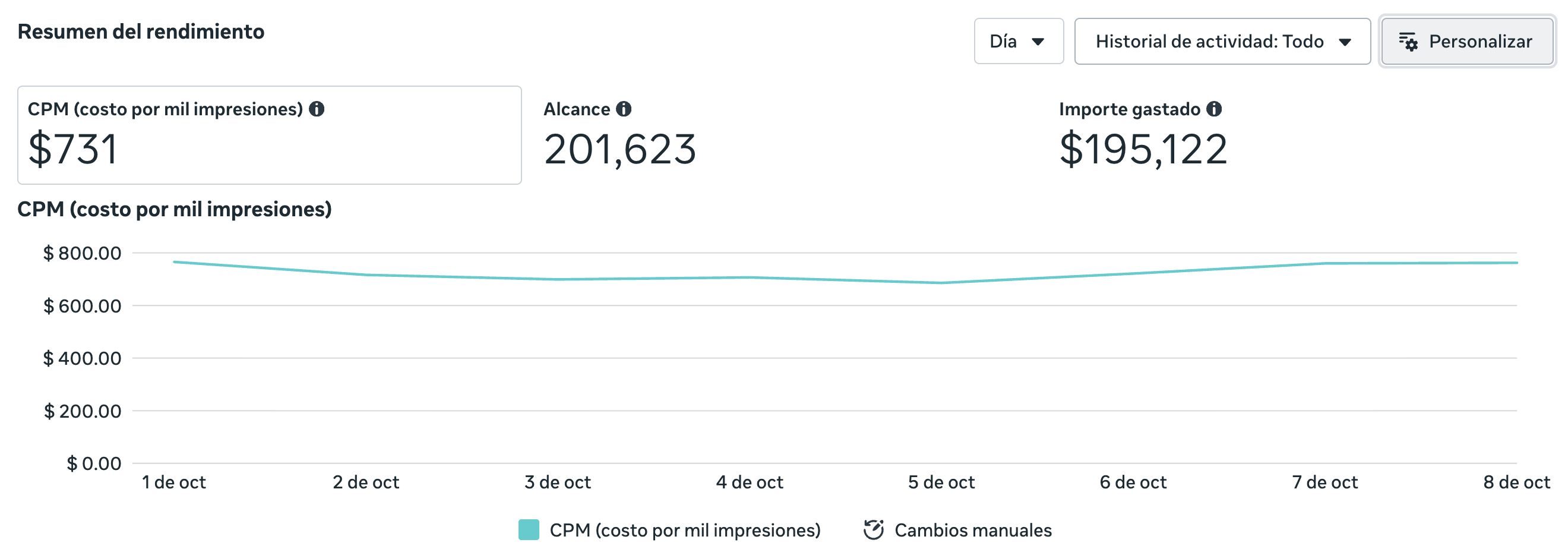
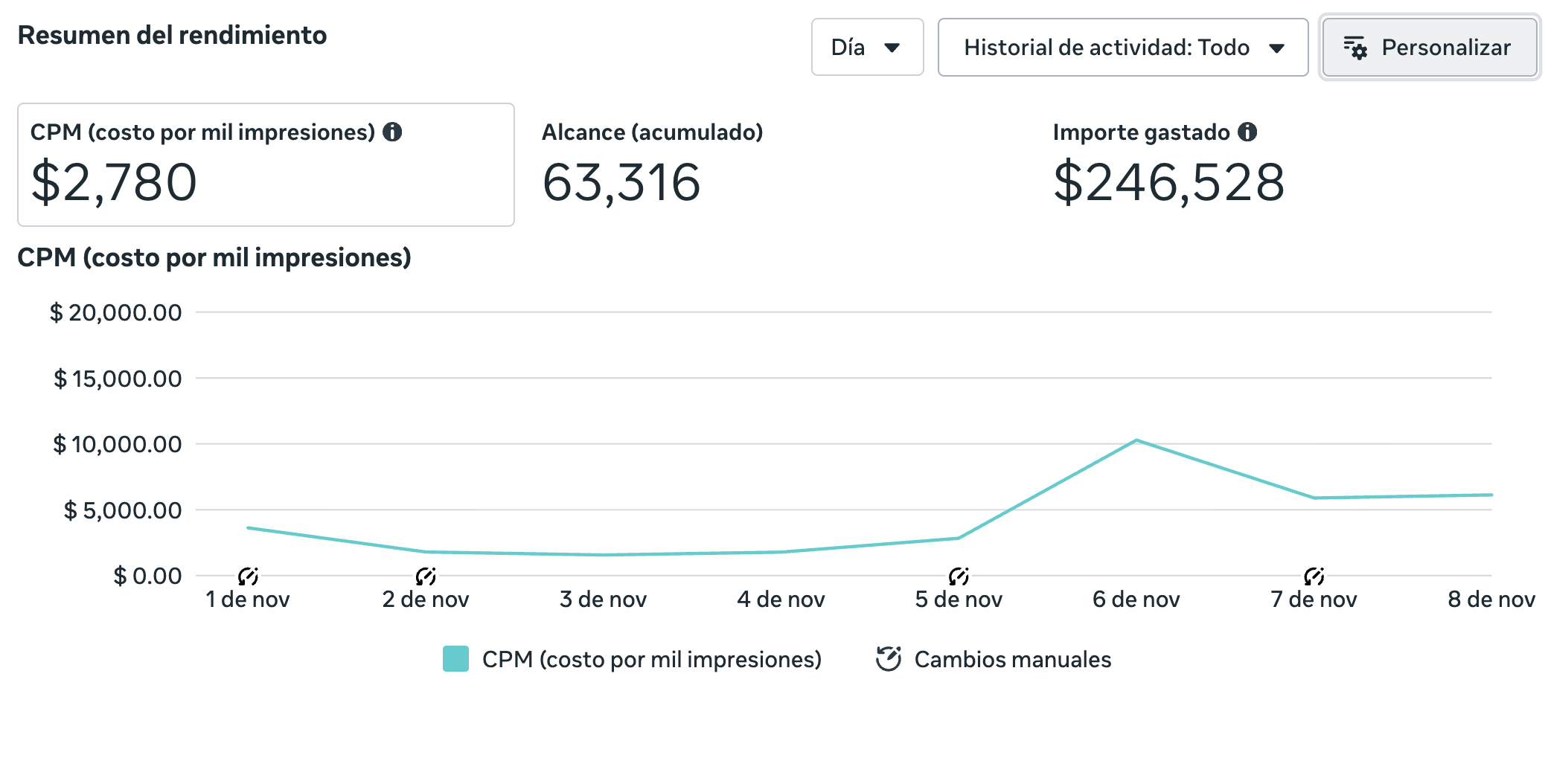
Miga Café is fictional. For a real comparison, Jairo Vélez shares observations from two De Otro Planeta campaigns. One aimed to maximize reach and the other sought profile visits. Jairo identified the campaigns. The screenshots show only part of their settings.
The reach screenshot shows a CPM of $731 for October 1–8. The profile visits screenshot shows $2,780 for November 1–8. The date ranges and spending differ, so this comparison cannot isolate the effect of changing objectives.
| Report metric | Campaign identified as reach | Campaign identified as profile visits |
|---|---|---|
| CPM shown | $731 | $2,780 |
| Reach shown | 201,623 | 63,316 |
| Reach column label | Reach | Reach (cumulative) |
| Amount spent | $195,122 | $246,528 |
| Chart dates | October 1–8 | November 1–8 |
We kept the currency symbols as shown and used English thousands separators. The screenshots show neither a year nor a currency code. These figures come from our accounts and do not establish a market benchmark for Colombia or results for Miga Café.
What the follower data tell us
According to Jairo, the higher-CPM profile visits campaign was still spending when he shared the material. Based on his knowledge of the account, he connects the new follower notifications to that campaign and confirms that it covers November 1–8. The other report covers October 1–8.
The Instagram notifications include the message “started following you from your ad.” That tells us how Instagram described individual follows. The screen gives no campaign ID, complete total or net follower count. We therefore treat these notifications as qualitative evidence.
What profile visits can tell us
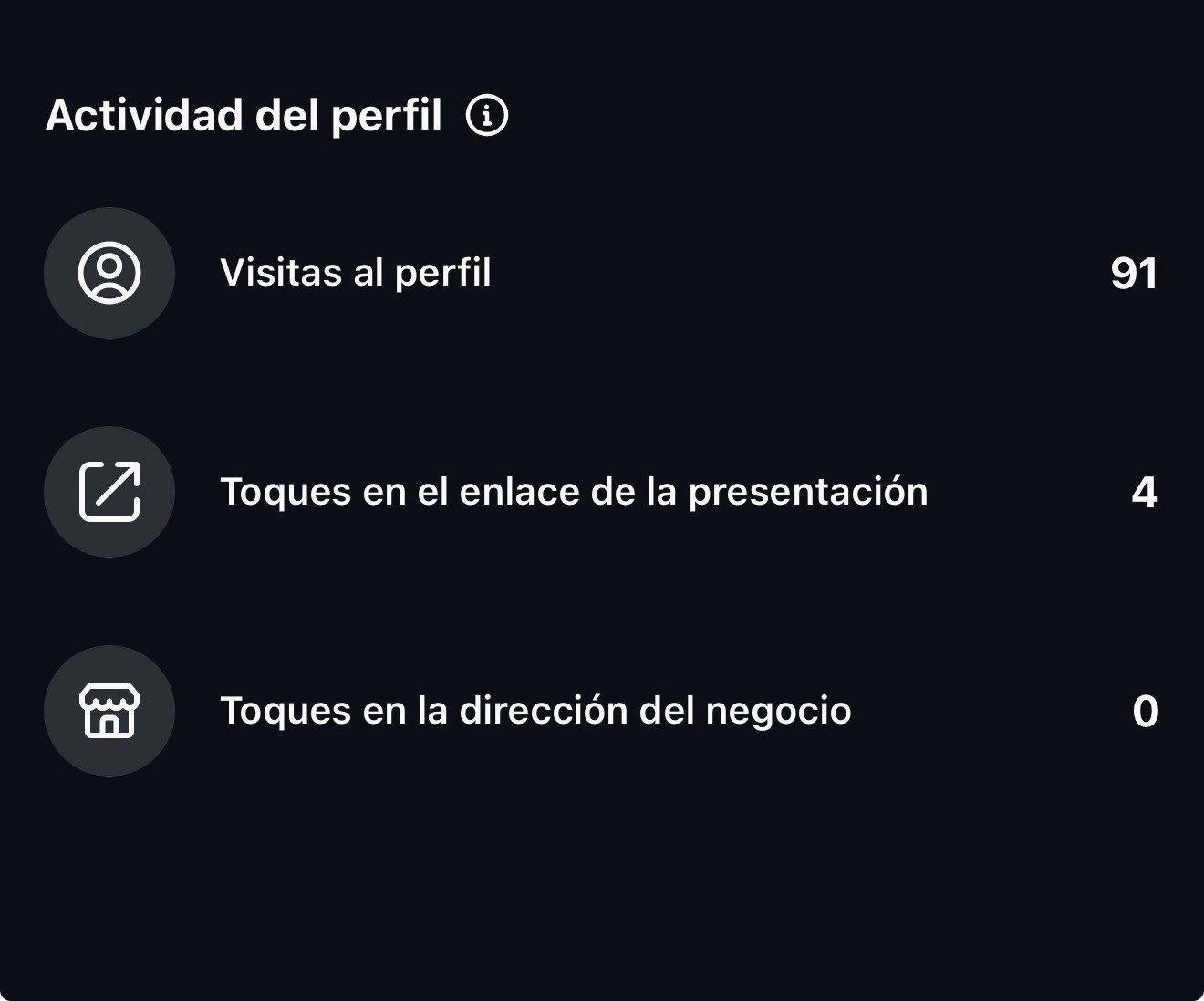
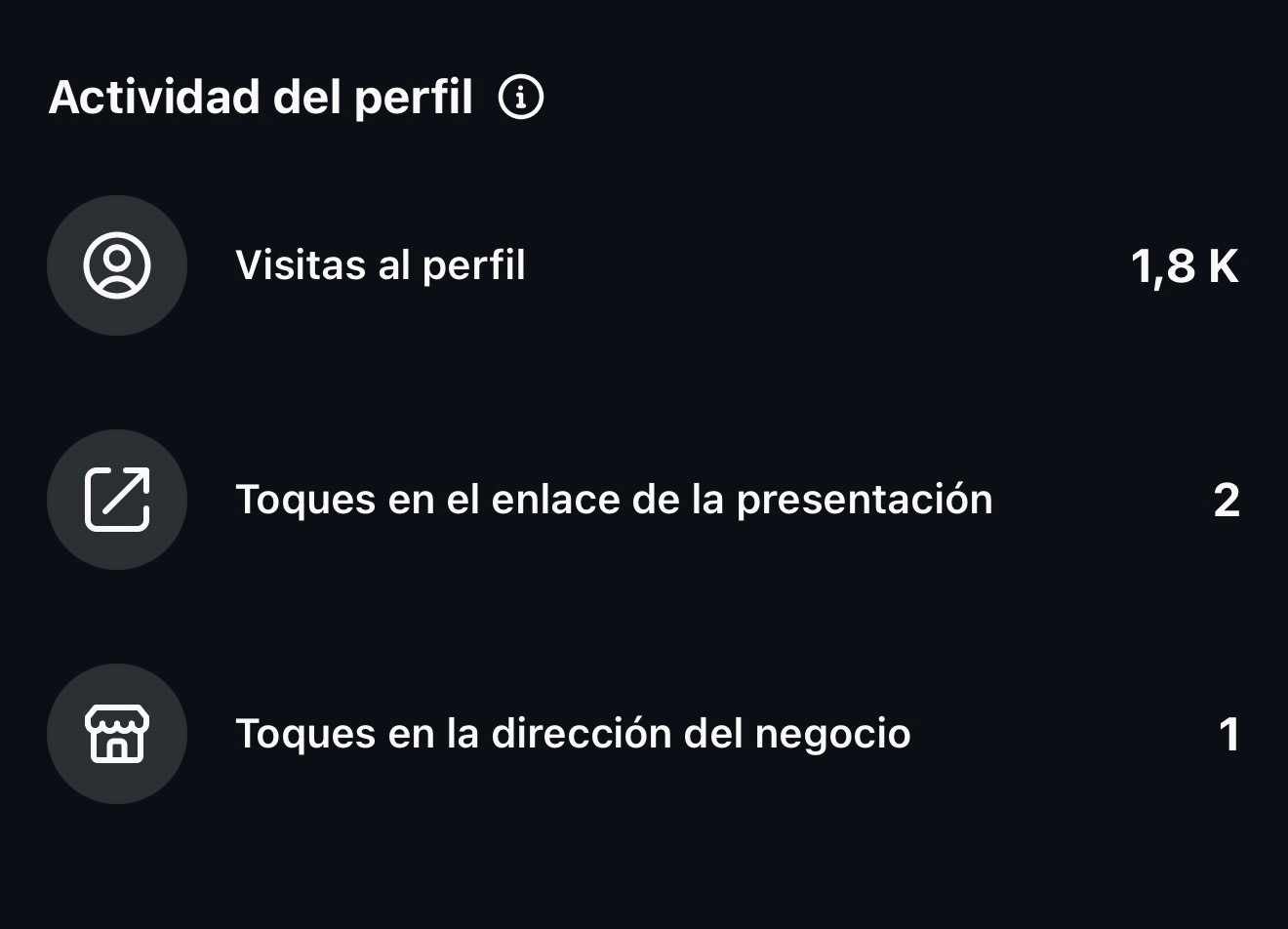
The Profile activity screenshots show 91 visits in the image Jairo identifies as October and 1.8K in November. The 1.8K figure is rounded. It should not be read as exactly 1,800 visits. Neither screenshot shows dates or a campaign breakdown. Jairo supplied the periods, and visits may include both paid and organic activity.
| Metric | October screenshot, per Jairo | November screenshot, per Jairo |
|---|---|---|
| Profile visits | 91 | 1.8K (rounded) |
| Bio link taps | 4 | 2 |
| Business address taps | 0 | 1 |
Opening a profile, tapping its bio link and tapping its address are different actions. An address tap does not verify a store visit. You still need ad impressions and link clicks to calculate link CTR.
Which dates the follower summaries cover
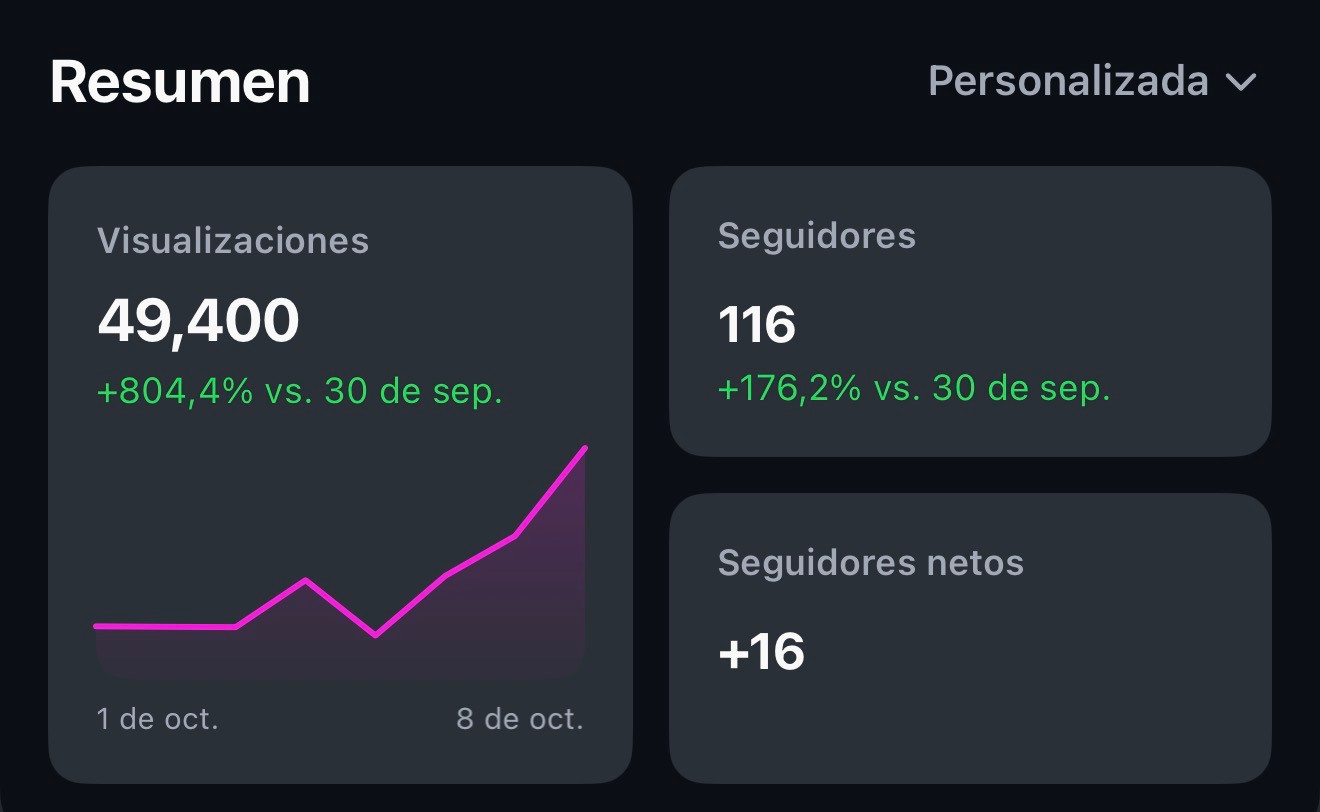
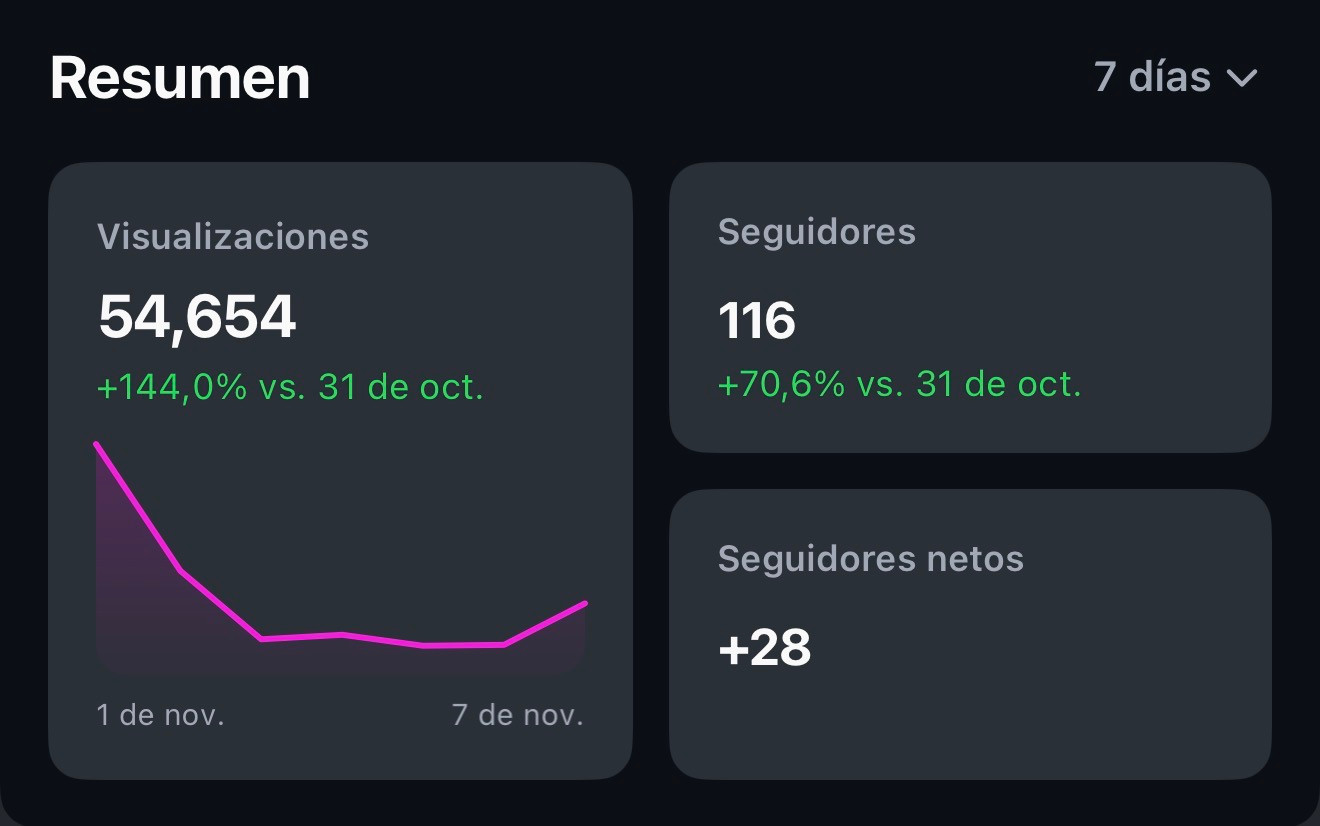
The growth summaries do show dates. October recorded +16 net followers from the 1st through the 8th, and November recorded +28 from the 1st through the 7th. The latter ends one day before the November CPM report. These are platform totals without an ad-level breakdown.
| Metric | October summary | November summary |
|---|---|---|
| Chart dates | October 1–8 | November 1–7 |
| Date selector | Custom | 7 days |
| Net followers | +16 | +28 |
| “Followers” card | 116 | 116 |
| Views | 49,400 | 54,654 |
The card labeled “Followers” shows 116 in both screenshots. We retain that label rather than interpreting it as new followers for each period. The views shown here are not ad impressions for calculating CPM or CTR. Neither summary establishes how much growth the profile visits campaign caused.
Because the date ranges and the scope of measurement differ, dividing campaign spend by these visits or followers would give a misleading cost per visit or follower. That calculation requires campaign-attributed results and compatible reporting windows.
Choose the outcome you want to assess. For exposure, review impressions, reach, frequency and cost. If you want profile visits or followers, measure those actions alongside CPM. The lowest CPM need not be the best outcome for a given objective.
What is a good CTR or CPM in Colombia?
Compare campaigns with similar objectives, audiences, placements and time periods, using the same currency and click definition. Check how many impressions and clicks sit behind the percentage. With small samples, a few clicks can shift the rate substantially.
A screenshot from one account describes one campaign in context. It cannot establish a country average or predict what another business will achieve. The figures here illustrate how to read a report.
What to check in your report
- Identify the objective and the action that counts as a result. A click, a conversation and a purchase measure different things.
- Use the same dates and reporting level for spend, impressions and clicks.
- Check the currency and the full CTR column name. Keep link CTR separate from CTR (all).
- Read CPM alongside reach and frequency to distinguish appearances from people reached.
- Follow what happens after the click. Track visits, inquiries or sales using the measurement appropriate to your business.
- Test one specific idea over a comparable period. Record the change before attributing an improvement to it.
Frequently asked questions
Are CPM and CTR the same thing?
CPM gives the average cost per 1,000 impressions in currency. CTR expresses clicks relative to impressions as a percentage.
Does a 1% CTR mean that 1% of people bought something?
In this example it means 10 link clicks per 1,000 impressions. Unique people and purchases are separate measurements.
Is a lower CPM always better?
That depends on the objective and what those impressions produce. The average cost of showing an ad tells you little about traffic quality or sales on its own.
Can I average the CTR or CPM across several ads?
Combine the underlying counts to calculate an overall rate. For CTR, add clicks of the same type and divide by total impressions, then multiply by 100. For CPM, add spending in the same currency and divide by total impressions, then multiply by 1,000. A simple average can mislead when ad volumes differ.
Further reading
- How to publish your first Facebook and Instagram ad.
- How to measure ad spend, opportunities, sales and profit.
- Why your ads generate messages but no sales.
Sources and scope
The formulas apply to the fictional exercise in this guide. Read the full column name in the Meta report to check which definition applies.
STRATEGY · CREATIVE · SALES
Track what happens after the ad.
Connect ad metrics with the journey people take and the outcomes your business can verify.
Explore our approach to advertising ↗Tell us about your project ↗