
Strategy and sales
Your ads generate messages but no sales: what to check
An inquiry signals interest, not a sale. If your business invests in advertising but conversations stall, review the entire journey: what you promise, whom you attract and how you support the decision.
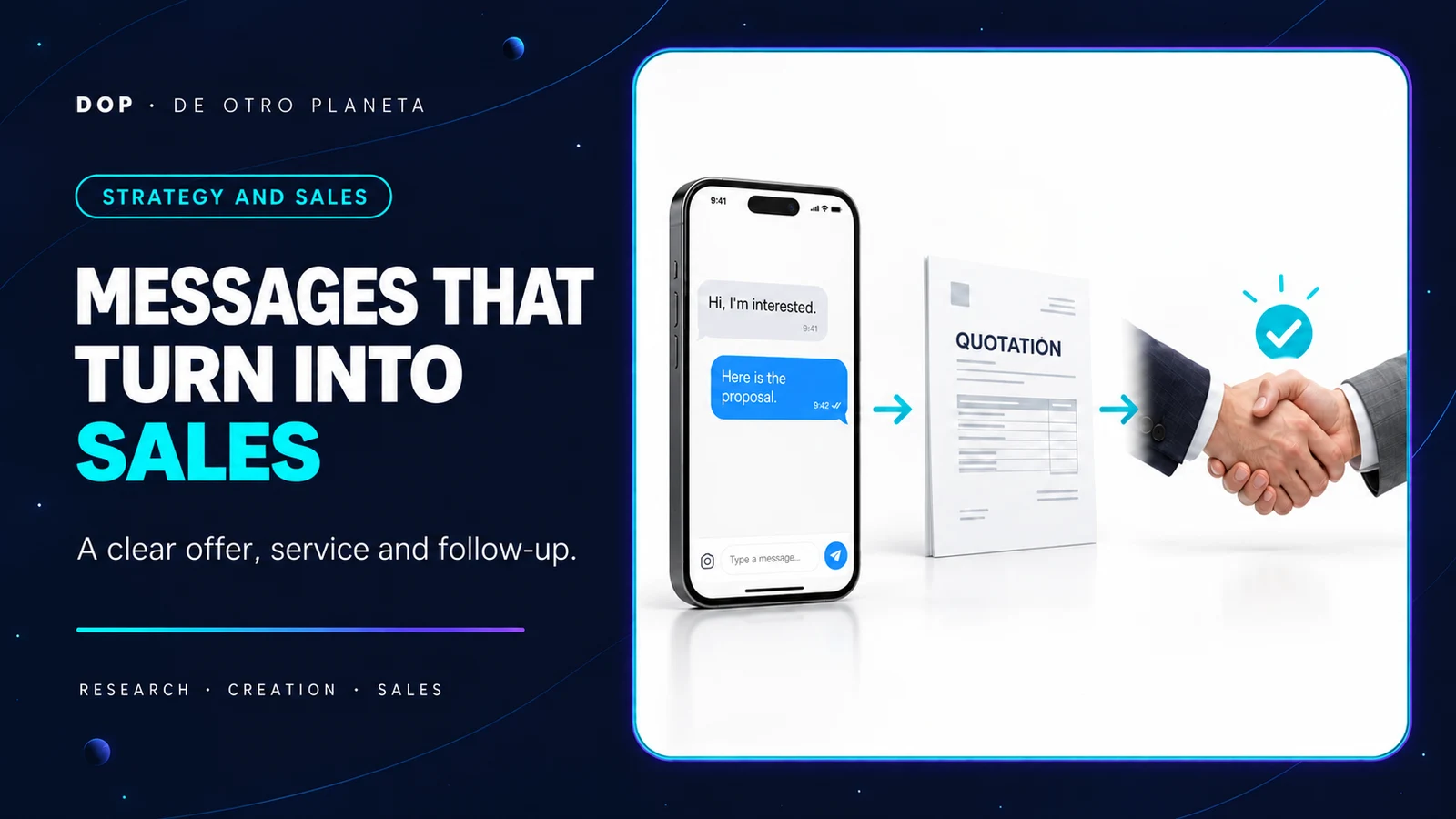
Before changing your campaign, find out where sales stall
Review a sample of recent opportunities from the same period. Record why each one moved forward or stalled. Was the customer outside your service area? Was the price out of reach? Did a question go unanswered, a quote arrive late or a follow-up lack an owner? If you cannot establish the reason, record it as unknown.
Imagine that people are writing from a city you do not serve. Check whether the ad makes your service area clear. If the inquiry is a good fit but nobody sends the promised quote, look at your sales process. You can check what happened before spending more on ads.
- Poor fit: review the offer, terms, service area and ad copy.
- Good fit but no next step: check who handled the inquiry, who owns it now and what deadline was agreed.
- Quotes awaiting a decision: find out which question or objection is holding up the buyer.
- Sales followed by refunds or delivery problems: include fulfillment in your review.
1. Review the expectations your ad creates
A campaign may attract people interested in a promotion rather than the solution you actually sell. Compare the ad, landing page and advisor's first response: all three should present the same offer and terms.
For corporate services and high-value products, explain whom the solution serves, which need it addresses and the next step. A broad promise can generate many unsuitable inquiries.
- Is the product or service understandable without extra explanation?
- Are location, coverage and terms visible?
- Does the call to action match the buyer's stage?
2. Evaluate the conversation, not just response speed
Responding promptly helps, but a generic automated reply cannot replace a useful conversation. The advisor or AI agent should identify the need, share verified information and propose a concrete next step.
Define who takes over when a customer requests a special quote, raises an objection or needs a person. Do not let automation become a barrier.
- Ask about the customer's need before sending the entire catalog.
- Offer a demonstration, assessment or quote as appropriate.
- Do not invent availability, prices or results to close a sale.
3. Build context into follow-up
When a sale takes several conversations, the team needs to know what was discussed and agreed. Record ownership, interest, status and the next step in a shared tool without collecting unnecessary data.
Useful follow-up returns to a customer's question or commitment. It is not the same message every day. Respect contact preferences and stop when asked.
4. Measure opportunities and business outcomes
At De Otro Planeta, we recommend reviewing the journey in stages. Interpret indicators against your business's actual decision cycle: a corporate purchase may take weeks or months.
Before increasing budget, identify where opportunities are lost. If suitable inquiries arrive but go unanswered or never receive a quote, more traffic can amplify the same problem.
- Inquiries received and inquiries that match the customer profile.
- Initial response time and conversations with an agreed next step.
- Quotes or demonstrations delivered and confirmed sales.
- Attributed spend and cost per opportunity, using consistent attribution criteria.
A starting point for your team
Review a sample of recent conversations without exposing personal information. Classify why they progressed or stopped, and choose one improvement: clarify the offer, refine targeting, train the team or simplify the page.
Evaluate the change over a comparable period. Strategy is not about promising a sales number; it is about understanding buyers and making it easier for them to move forward.
Finish with numbers your team can explain
Count conversations, qualified opportunities, confirmed sales and refunds separately. Keep one record per opportunity. Connect each order to a source when you have evidence. If Meta and Google both report the same purchase, count the order once.
Pick one change and decide how you will measure it. Record the reporting period, cutoff date and typical time to purchase. Comparing two weeks with different volumes or with deals still open can give you a misleading picture.
STRATEGY · CREATION · SALES
Let's turn the idea into a plan for your business.
Let's review your offer, your customer journey and improvements that make sense for your business.
Explore our marketing and sales approach ↗Let's discuss your project ↗